


Anita Adiukwu
A senior from Dorchester originally from Nigeria, Anita aspires to be a surgeon. Her animations playfully explore the human body, combining her interest in medicine, drawing, and identity. She responded to Alberto Rodriguez’s story of immigrating to Boston and Dr. Gloria White-Hammond’s story of discovering her calling to medicine.

Giovanni Depina
A Cape Verdean sophomore from Roxbury, Giovanni’s interests include science, art, and engineering. Through extensive research, he brought Robert Peter’s Moshup story and poetry to life. He also animated Carolyn Ingles’ description of Boston’s vibrant art scene in the 80s and 90s along with Tim Juba’s story of advocating for racial justice in Dorchester.
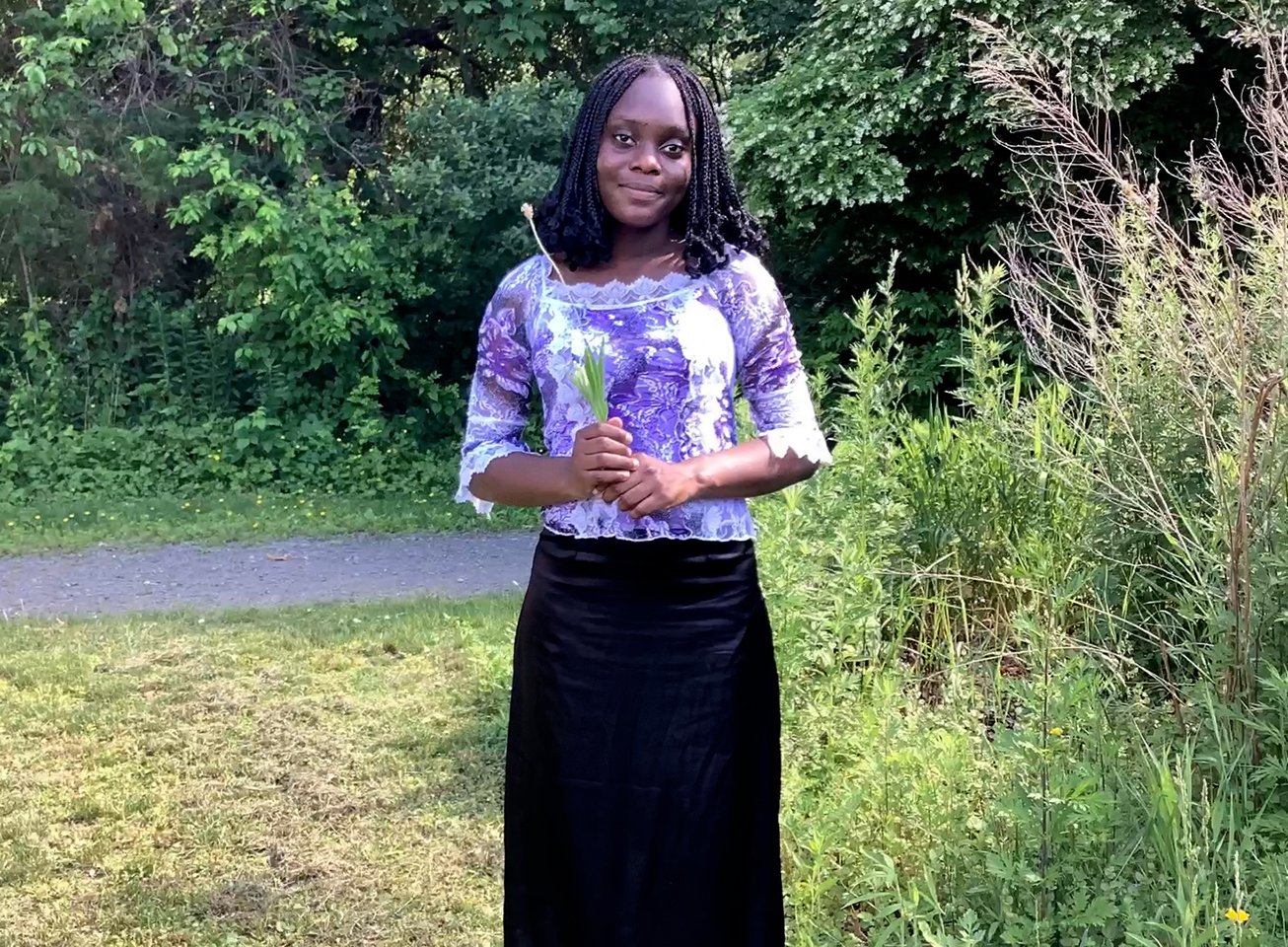
Rose Gelin
A sophomore from Mattapan originally from Haiti, Rose aspires to be an obstetrician. Her animations are deeply personal, drawing upon her Haitian identity. She visualizes memory with pastel and paper cutouts. She sensitively animated Dr. Gloria White-Hammond’s tragic story of losing a patient to gun violence.

Erin Harvey
A sophomore from Dorchester whose family is from Ireland, Erin aspires to be an artist. She excels at portraiture, drawing out her subject’s emotional states. She responded to two stories of family—Carolyn Ingles’ stable family and Alberto Rodriguez’s chosen, non-biological family growing up in Venezuela.

Dia Jimon
A sophomore from Allston of Guatemalan extraction, Dia’s interests include storytelling and community building. She responded to Robert Peter’s Wampanoag stories with an animation of her own Indigenous ancestry, transforming a Guatemalan blanket into a volcano and then into a strand of DNA. She also responded to James Coleman’s artwork of racial identity and familial memory.

Marie Liza Manigat
A Haitian sophomore from Mattapan, Marie Liza aspires to be a cardiologist or neurologist. With watercolor and detailed line work, she animated joined hands that form a protest. She responded to Carolyn Walden and James Coleman’s description of their friendship and their activism, discussing how social transformation begins with community connection.
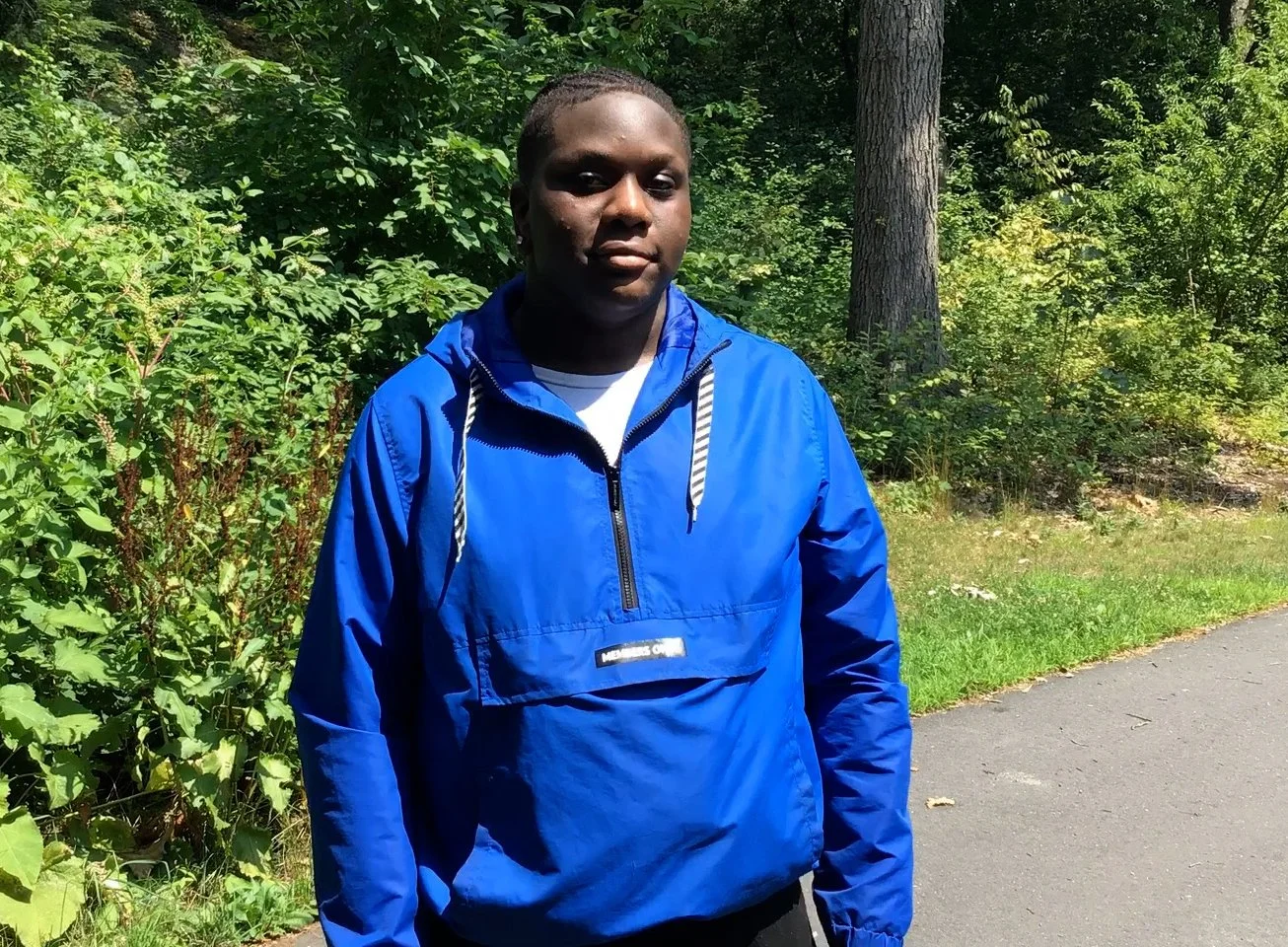
Vlad Mesidor
A senior from Dorchester, Vlad aspires to be an artist and animator. His rich, painterly style draws upon his Haitian identity. In response to Carolyn Walden’s discussion of the importance of cooking in community, Vlad animated his grandmother making Soup Joumou—the meal shared on Haitian Independence Day.

Chenaya Valeus
A Haitian sophomore from Mattapan, Chenaya loves art and the environment. She paints lush landscapes with acrylic. Responding to Tim Juba’s story of living off the land during his childhood in Trinidad, Chenaya animated her own vegetable garden in Haiti. An athlete, Chenaya also created playful pixilations (animations with her own body.)

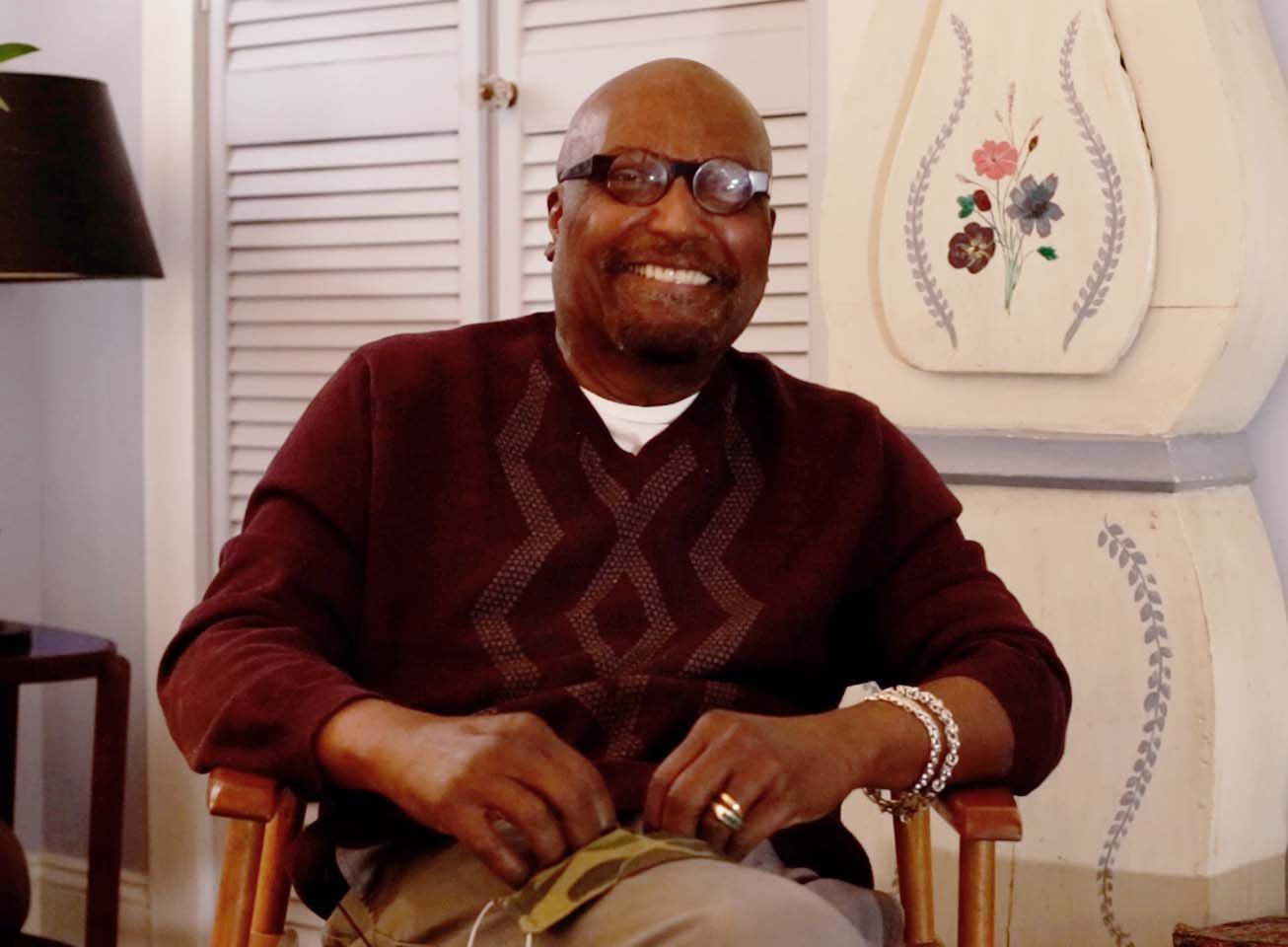
James Ellis Coleman
James is a conceptual multimedia artist working in photography, video, sculpture, and lace making. His artwork transforms historical objects with racially charged meanings. He says of his work in the film:
“You have to document the past, because it’s so easily forgotten.”

Carolyn Ingles
Carolyn’s multi-faceted career included public relations work in government, mental health, and community arts programming. Among her many roles, she was an aide to the late Sen. Bill Owens, Massachusetts’ first state senator of color. Her work with the New England Conservatory Community Services brought jazz music to prisons.
“The more you live, the more you can create, and the more of yourself you can put into more of the world that you see. But if you do what you love, man—that’s happiness.”

Tim Juba
A retired construction worker from Trinidad, Tim helped build Boston’s first entirely self-sufficient building at Mass Audubon’s Boston Nature Center. At 80 years old, he continues as the Nature Center caretaker. He was also an activist with ACORN (The Association for Community Organization for Reform Now) where he helped fight and win cases against racial discrimination in housing and employment. In reference to clean energy, he states:
“We’ve got plenty of energy that we can live on—clean and pure air and you will live longer than you are supposed to live.”

Robert Peters
Robert is a member of the Mashpee Wampanoag tribe that have called Massachusetts home for 10,000 years. He is a painter, a poet, and a retired MBTA driver. His 2020 calendar, Thirteens Moons, is a visual thread throughout the film.
“Telling our stories is taking back a measure of power. Having that power over your life is really what makes your world home.”
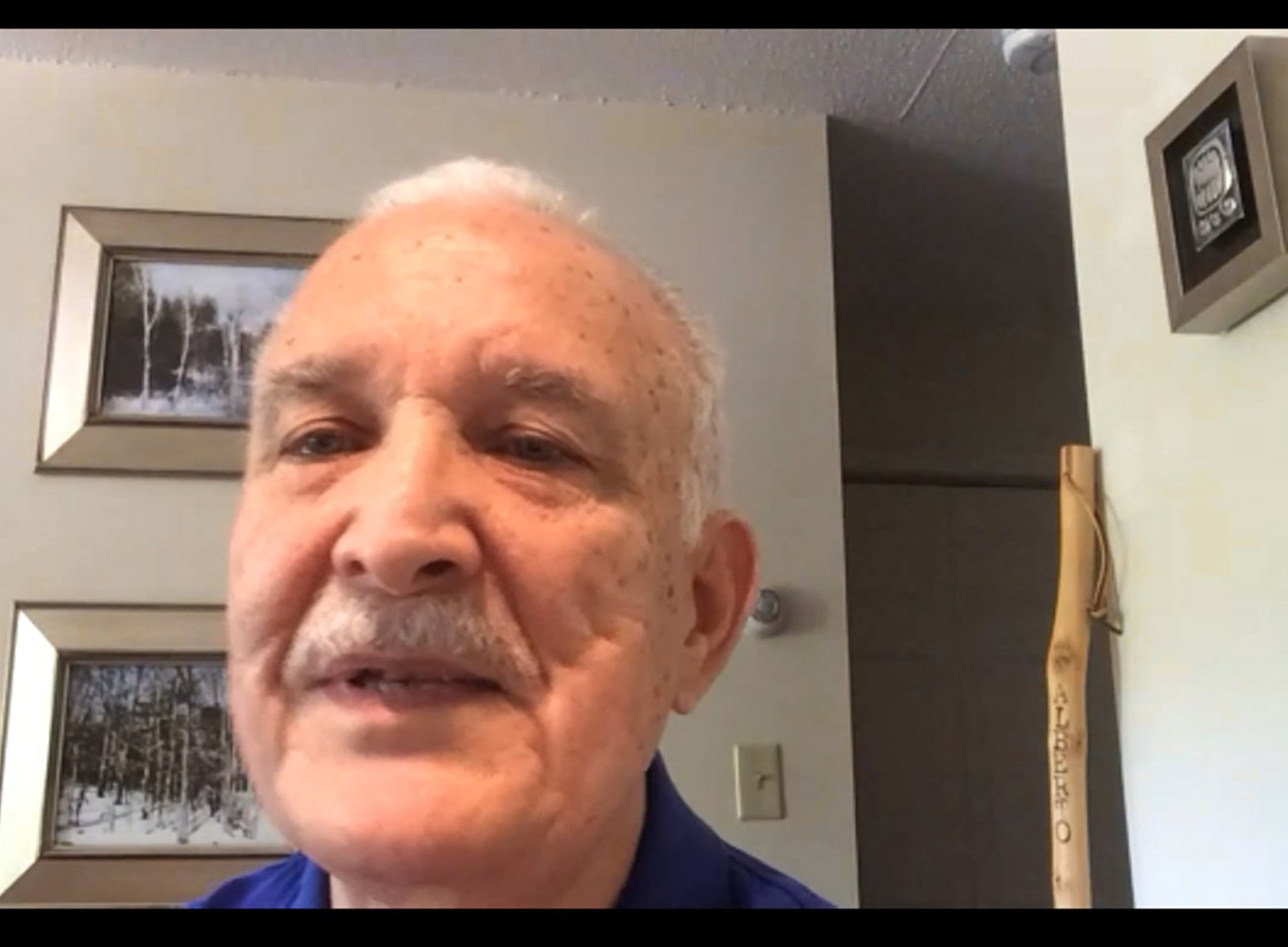
Alberto Rodriguez
Alberto is from Venezuela where he worked first as a teacher and then in the oil industry. As the oil-fueled Venezuelan economy began to deteriorate, he immigrated to Boston to pursue a career in counseling. He worked with families whose children were facing emotional, behavioral, or psychological challenges.
“The only place that you really know well is the place that you grew up as a child. Your heart will be always there.”

Carolyn Walden
A native Bostonian, Carolyn attended Freedom School as a child and was later involved in many protest movements from Boston’s busing crises to the anti-war movement. Her wide-ranging communications career included media production at WGBH and public relations for the Boston Department of Health and Hospitals.
“I am happy that Boston is my home—a heavily flawed place, but also a place of very beautiful people.”

Dr. Gloria White-Hammond
Gloria is a retired pediatrician, humanitarian activist, and co-pastor of Bethel A.M.E. Church in Jamaica Plain. From 1981 to 2008, she worked at the South End Community Health Center where she cared for adolescents caught up in gang activity. In response, she founded Do The Write Thing, a writing program and social/emotional support for young adolescent women.
“It wasn’t just medicine—it was healing. Whatever I did was not going to be constrained to a particular career, but was going to be a way of life.”


Carolyn Shadid Lewis is an artist, filmmaker, animator, and educator whose work tells personal stories of belonging. Her films and installations have shown in festivals and museums internationally, such as at the Sirius Arts Center in Cobh, Ireland, and at the Lebanese Independent Film Festival in Beirut. Her work has gained the support of many organizations, including the Irish Arts Council, the New England Foundation for the Arts, the Boston Public Health Commission, and the National Endowment for the Arts. She has partnered with Facing History and Ourselves, CoGenerate, and the Collaborative for Academic, Social, and Emotional Learning (CASEL). Her documentary, InterGeneration brought a diverse group of Boston teens and elders together during the pandemic for storytelling and animation. The film broadcast on GBH and is streaming on PBS. The InterGeneration Lab, a broader project inspired by the film, bridges generations through the arts. She began the work as the 2024 Artist-in-Resident at Massachusetts College of Art and Design.
Growing up in a military home with Irish and Lebanese grandparents, Carolyn heard many stories of distant lands and bygone eras. These stories influenced her own experience of the world. Early on, she saw how oral history could empower the listener to change their present by better understanding the past. She also saw the storyteller come alive as they remembered themselves in a younger state. By empathetically listening to stories, including those of pain, loss, and grief, Carolyn learned that she and the storyteller were better connected and less alone. Carolyn’s work today continues what she learned as a child. She seeks to create empathetic experiences for participants in her interdisciplinary artwork, transforming the solitary act of remembrance into a shareable experience.


Plot the Points album cover art by Kasey Edgerton

The Kansas City/Boston-based band (Jason Lewis, Andrew Sallee, and Chuck Whittington) produced the soundtrack to InterGeneration. Check out their latest album, Plot the Points. The band’s richly textured songs beautifully accompany the teens’ animations.
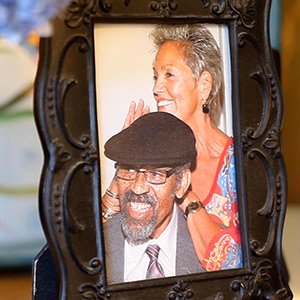
Carolyn Ingles with her late husband, the Jazz musician, Tim Ingles.

The Boston jazz trio consisted of Sergio Belotti, Tim Ingles (until his passing in 2015), and Frank Wilkins. Their music interweaves with Carolyn Ingle’s story, celebrating Boston’s jazz tradition.
The Tim Ingles Memorial Scholarship Fund at the Eliot School of Fine and Applied Arts offers aid for youth to participate in programming like the Teen Bridge Program.


InterGeneration began in the Teen Bridge Artist-in-Residence Program at the Eliot School of Fine and Applied Arts in Jamaica Plain, whose programming is made possible through the generous support of The Joe Kalt & Judy Gans Family Foundation, Linde Family Foundation, Maureen and David Moses Family, National Endowment for the Arts, New World Foundation, Plymouth Rock Foundation and general support from Mass Cultural Council.



The film was generously funded in part by New Work New England of the New England Foundation for the Arts, made possible with funding from the National Endowment for the Arts, the Seedlings Foundation, the Fund for the Arts at NEFA, the American Rescue Plan, Anonymous Foundation, and from individual donors.


Additional support for the film comes from the the Boston Public Health Commission and from a project grant from the National Endowment for the Arts. InterGeneration was produced in association with the Center for Independent Documentary.